
Marine varnish Malta boat owners choose has to survive conditions most varnish never sees. Direct Mediterranean sun runs most of the year here, on top of salt spray and heat most manufacturers rarely test for. Picking the wrong type, or applying it wrong, means a finish that yellows, cracks or peels within a season instead of lasting several. This guide covers the real differences between traditional, two-component and quick-dry varnishes, how to apply them properly, and the Epifanes range DockShop stocks for every finish and location on a boat.
Why Marine Varnish Matters More in Malta
UV breaks down varnish faster than almost anything else it’s exposed to. Malta gets more direct sun than most varnish on the market was designed around. A finish rated for Northern European summers can chalk and yellow here within a single season, if it isn’t UV-stabilised. Heat also speeds up drying, which changes how varnish needs to be applied compared to a cooler climate.
Bare or poorly-varnished teak and brightwork don’t just look tired. Once the finish fails, moisture gets into the wood underneath. Grey, weathered timber is far more work to restore than timber that’s simply due a fresh coat. Keeping ahead of that cycle is what makes marine varnish Malta boats need worth applying properly the first time.
Traditional, Two-Component & Quick-Dry Varnish
Not all marine varnish works the same way. In practice, the right type depends on how much time you have, and how hard the finish needs to work:
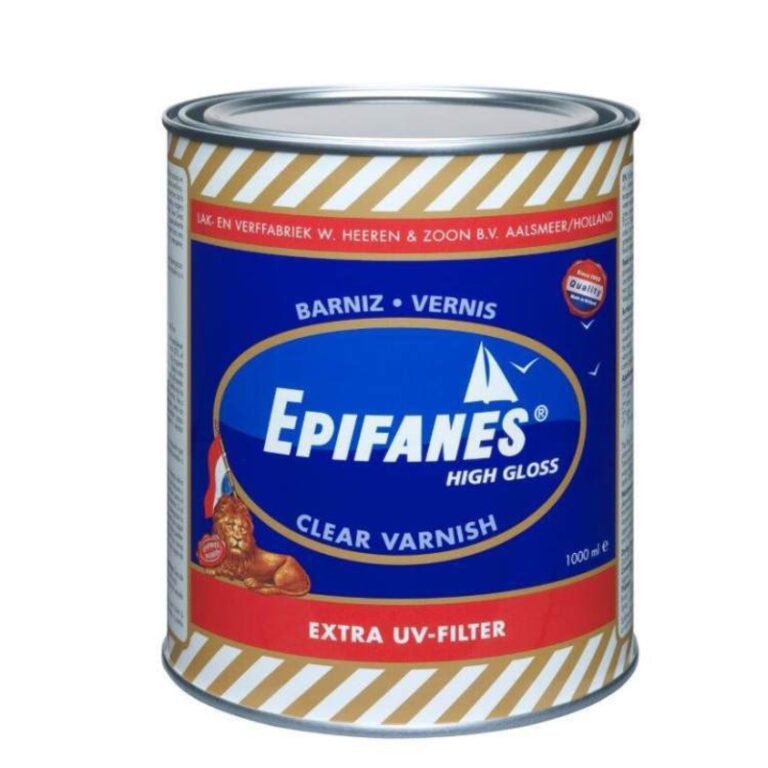
- Traditional build-up varnish: applied in multiple thin coats to build a deep, glossy film. Epifanes Clear Varnish is the classic version of this, prized for its flow and high gloss. Epifanes PP Varnish Extra is a faster-building alternative that needs fewer coats to reach the same depth.
- Two-component (2K) varnish: a catalysed finish that cures harder than a one-component varnish. Epifanes Poly-urethane Clear Gloss and Clear Satin both fall into this category. They suit high-wear areas like handrails, cockpit trim and companionway steps.
- Quick-dry alternatives: for owners who want a varnish-like look without the coat count. Epifanes Rapidcoat and Rapidclear are semi-gloss, UV-resistant finishes. They dry fast enough to redo brightwork in a weekend instead of a week.
Spray applicators have their own option too. Epifanes PU Speedcoat Clear is built specifically for spray finishing rather than brush or roller work.
Choosing the Right Sheen: Gloss, Satin & Matte
Sheen is partly a style choice and partly practical. Gloss shows off grain and depth best, so it’s the usual choice for exterior brightwork like toe rails, handrails and companionway trim. Satin and matte finishes hide small scratches and surface imperfections better. That’s why Epifanes Woodfinish Matte and Rubbed Effect Varnish are popular for interior joinery that gets handled often. Epifanes Woodfinish Gloss sits in between, built specifically for teak and iroco where a high-gloss finish is wanted without a full build-up schedule.
How to Apply Marine Varnish
Good preparation matters more with varnish than almost any other marine coating. Every flaw in the wood shows straight through a clear finish.
- Sand back to bare, sound wood: remove old, failing varnish completely rather than coating over it. Trapped moisture under an old film is the most common cause of early peeling.
- Clean and tack the surface: dust left behind from sanding shows as texture in the finished coat. Wipe the surface down before opening the tin.
- Thin the first coat: a thinned first coat, using something like Epifanes Brushthinner, soaks into bare wood better. It also gives later coats something solid to key into.
- Build multiple thin coats: thin coats level better and dry more evenly than one thick one. Traditional varnish typically needs 6 to 8 coats for a full build; quick-dry alternatives need far fewer.
- Sand lightly between coats: a light scuff-sand between coats gives the next layer something to grip. It also keeps the surface level as the build progresses.
- Add a flow additive if needed: in Malta’s heat, varnish can dry too fast to level properly. Epifanes Easy-Flow extends open time so brush marks settle out before the coat skins over.
- Apply the final coat with care: this is the coat that shows. Work in shade where possible, and avoid varnishing in direct midday sun, which can cause the surface to skin before it levels.
How Many Coats Does Teak Need?
Bare teak getting its first full build typically needs 6 to 8 coats of traditional varnish for real depth and protection. A boat already varnished, and simply due for maintenance, usually only needs 2 to 3 fresh coats a year to stay ahead of UV damage. Skipping that yearly top-up is why so many boats end up needing a full strip-back instead of routine upkeep.
Common Varnishing Mistakes
- Varnishing over failing old varnish instead of sanding back to bare wood, which traps moisture and causes early peeling.
- Skipping the thinned first coat, leaving poor adhesion into bare or previously-stripped timber.
- Applying too few coats on bare wood, which leaves the film too thin to resist Malta’s UV levels for a full season.
- Varnishing in direct sun or high heat, which can cause the coat to skin over before it has time to level and flow out.
- Missing the annual top-up coat on already-varnished brightwork, which is far less work than a full strip and rebuild later.
Interior vs Exterior Varnish
Exterior brightwork needs UV resistance above everything else. In contrast, a cabin interior never has to deal with that. Traditional gloss varnish and two-component finishes both handle this well. Interior joinery has different priorities: it needs to resist scuffs, cleaning products and daily handling rather than sun. That’s where Epifanes Woodfinish Matte and Rubbed Effect Varnish earn their place below deck instead of on it.
Frequently Asked Questions
How often does marine varnish need redoing in Malta?
Most already-varnished brightwork needs a fresh top-up coat once a year to stay ahead of UV damage. Left two or three years without a top-up, the same job turns into a full sand-back and rebuild instead of routine maintenance.
Can I varnish over old varnish, or do I need to strip it first?
A sound, well-adhered existing coat just needs a light scuff-sand before a fresh coat goes on. Cracked, peeling or grey varnish needs sanding back to bare wood first, since coating over a failing finish traps moisture underneath.
What’s the difference between gloss and satin marine varnish?
Gloss shows off wood grain and depth, and is the standard choice for exterior brightwork. Satin and matte finishes hide small scratches better, which suits interior joinery that gets handled daily.
Quick Facts: Marine Varnish Malta
- Bare teak first build: typically 6 to 8 coats
- Annual maintenance top-up: typically 2 to 3 coats
- Best sheen for exterior brightwork: gloss
- Best sheen for interior joinery: satin or matte
- Two-component varnish cures harder than one-component varnish
- Avoid varnishing in direct midday sun or high heat
Epifanes Varnish at DockShop
DockShop stocks the full Epifanes range, made by Epifanes. It covers traditional gloss varnish, two-component finishes, quick-dry alternatives and interior wood finishes in one place. Epifanes Clear Varnish and PP Varnish Extra cover classic build-up varnishing. Poly-urethane Clear Gloss and Clear Satin cover high-wear two-component work, and Rapidcoat and Rapidclear cover fast exterior refreshes. Thinners, flow additives and both brush and spray formulations are stocked alongside the varnishes, so a full job doesn’t need sourcing from more than one supplier.
Varnish is usually done at the same haul-out as antifouling, so it’s worth planning both jobs for the same yard period each season.
Getting marine varnish Malta boats need right comes down to matching the product to the job, preparing the wood properly, and staying ahead of UV damage with a yearly top-up rather than waiting for a full strip-back. DockShop ships island-wide, so whichever finish a boat’s brightwork or joinery calls for is a straightforward order away.


